
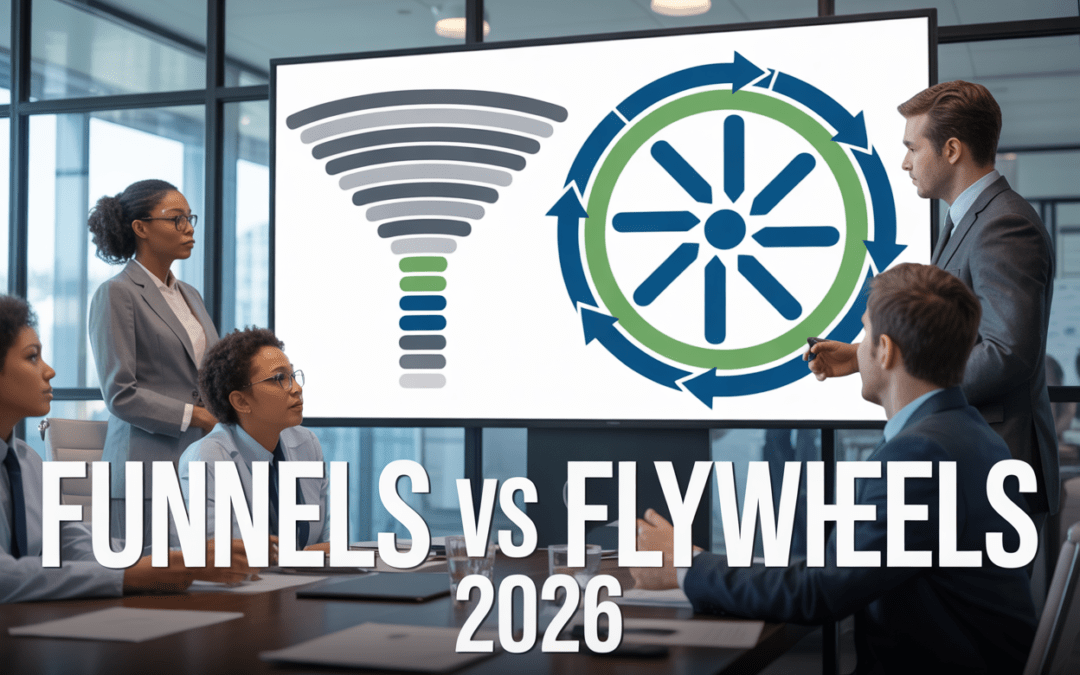
Marketing leaders, business owners, and growth strategists are rethinking everything they know about customer acquisition. The traditional marketing funnel that guided business growth for decades is losing its grip in today’s interconnected marketplace.
You’re likely here because you’ve heard the buzz about flywheel models replacing funnels, or maybe your current marketing approach isn’t delivering the sustainable growth you expected. The truth is, choosing between marketing funnels vs flywheels isn’t just about following trends—it’s about understanding which model actually drives lasting business results in 2026.
We’ll break down the core differences between these two marketing models and show you why many successful companies are ditching the funnel approach. You’ll also discover the specific advantages that make flywheel marketing so powerful for building momentum, plus the key metrics you should track to measure success with either model. By the end, you’ll know exactly which approach fits your business goals and customer behavior patterns.
Understanding the Fundamental Differences Between Marketing Models
How Traditional Funnels Operate in Linear Customer Journeys
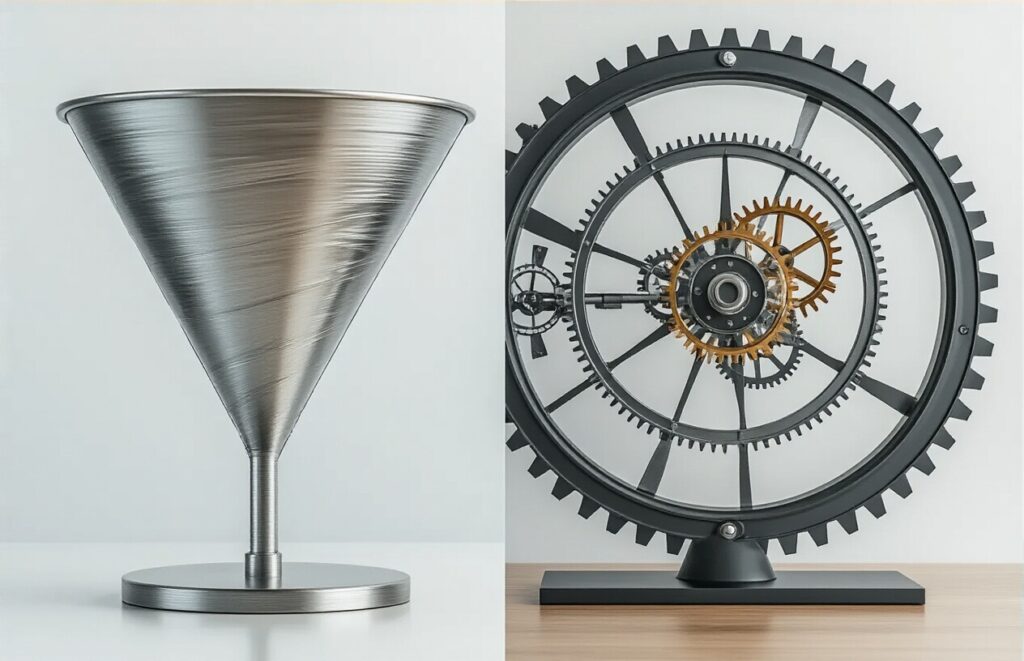
Traditional marketing funnels follow a rigid, linear path in which prospects enter at the awareness stage and systematically move through the interest, consideration, and action phases. This 122-year-old model, developed by E. St. Elmo Lewis in 1898, visualizes your buyer’s journey as a funnel, filtering prospects from the top to the bottom, with the hope that a few will convert into customers.
Why Flywheel Models Create Circular Growth Systems
Unlike funnels that end when customers make purchases, flywheel models position your customers at the center of a continuous circular process. This energy-efficient system stores and releases momentum through satisfied customers who become active promoters of your brand. The flywheel’s speed increases when you apply force to areas with larger impact – particularly customer delight rather than just initial attraction.
Why Marketing Funnels Are Becoming Outdated in Modern Business

Limitations of the Linear Push-Through Approach
Your traditional marketing funnel operates on the false premise that customers move in a straight line from awareness to purchase. However, the modern customer journey involves 7-13 touchpoints across multiple devices and channels, with customers moving back and forth between stages. When you force this complex, non-linear behavior into a rigid linear framework, you miss critical touchpoints and fail to nurture relationships effectively.
The Problem with Treating Conversion as the Finish Line
Most marketing funnels treat the initial purchase as the end goal, but this mindset severely limits your revenue potential. After helping 750+ businesses build revenue-generating systems, the pattern is clear: companies focusing only on acquisition while ignoring retention leave massive value on the table. Your customers who complete that first transaction represent your greatest opportunity for expansion revenue, referrals, and long-term growth.
How Funnels Overemphasize Acquisition While Neglecting Retention
Your funnel-focused approach creates a dangerous imbalance: 98% of effort goes toward acquiring new customers, while existing customers receive minimal attention. Companies investing heavily in acquisitions often see 8.2% churn, while competitors using retention-focused strategies achieve 3.9%. When you optimize only for moving prospects through the funnel rather than maximizing customer lifetime value, you’re essentially running on a revenue treadmill.
The Strategic Advantages of Flywheel Marketing Models
How Customer Delight Creates Sustainable Momentum
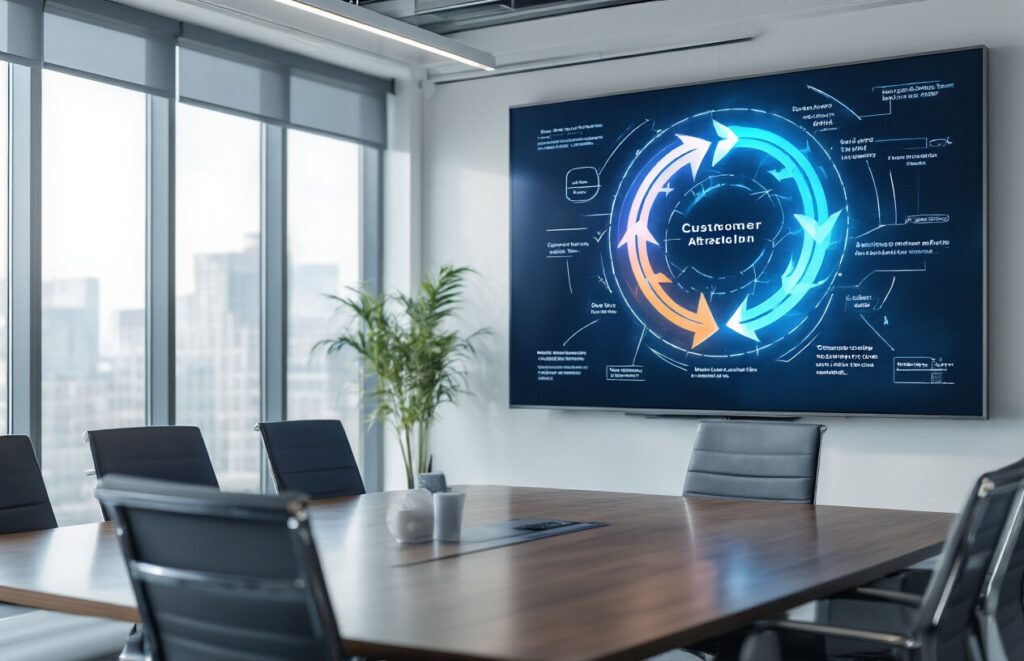
Your flywheel’s speed increases when you focus on helping customers succeed, as they become more likely to share their success with potential customers. When you deliver remarkable customer experiences through the delight phase, you help support and empower customers to reach their goals, creating promoters who actively recommend your business to their networks.
Leveraging Existing Customers as Growth Accelerators
With the flywheel model, you use the momentum of your happy customers to drive referrals and repeat sales, essentially turning your customer base into your best sales force. Your existing customers become a driving force that spins your flywheel faster, providing a much more efficient way to attract new customers while maintaining existing relationships through authentic word-of-mouth recommendations.
Key Performance Indicators That Matter in Each Model

Funnel Metrics: Lead Generation and Conversion Rates
When measuring funnel performance, you’ll focus on traditional metrics such as conversion rates, cost per lead (CPL), marketing-qualified leads (MQLs), and sales-qualified leads (SQLs). These indicators track your campaign efficiency and help you identify where leads drop off in your sales process. You can optimize each funnel stage by monitoring these specific conversion points, making this approach ideal for performance marketing teams looking to maximize ROI from targeted campaigns.
Flywheel Metrics: Customer Experience and Friction Reduction
Your flywheel success depends on customer-centric metrics, including Customer Lifetime Value (CLV), Net Promoter Score (NPS), referral rates, and churn reduction. These indicators measure how well you’re delighting customers and generating momentum through advocacy. Unlike funnel metrics that end at conversion, flywheel KPIs track ongoing engagement, measuring how customer satisfaction fuels future business growth through word-of-mouth referrals and repeat purchases.
Making the Right Choice for Your Business in 2026

When Funnel Models Still Provide Value
You should consider funnel models when your business operates in highly regulated industries where compliance and linear customer journeys remain critical. Industries requiring extensive documentation, clear approval processes, and structured decision-making stages still benefit from funnel approaches. Your funnel strategy works particularly well for complex B2B sales cycles in which multiple stakeholders require specific information at predetermined stages.
Industries and Business Types That Benefit Most from Flywheels
Your business will thrive with flywheel models when you operate in consumer-focused industries where authentic engagement and trust become currency. Retail media networks, creator marketing platforms, and brands leveraging micro-communities see exceptional performance with flywheel approaches. Your flywheel strategy excels when you can transform customers into advocates who drive continuous growth through organic recommendations and authentic brand interactions.

The choice between marketing funnels and flywheels isn’t just about selecting a model—it’s about embracing a fundamental shift in how you think about growth. While funnels served their purpose in a transactional era, they struggle to capture the continuous, social nature of today’s customer journey. The flywheel model better reflects modern business reality, where customers don’t simply convert and disappear but become active drivers of sustained momentum through referrals, reviews, and ongoing engagement.
As you plan your marketing strategy for 2026, consider whether you’re optimizing for throughput or momentum. If your focus remains on pushing leads through a linear pipeline, you’re missing the compounding power of delighted customers who fuel long-term growth. The businesses that will thrive are those that reduce friction in the customer experience and build systems in which each positive interaction fuels their growth engine. Your conversion shouldn’t be the finish line—it should be the beginning of a relationship that powers your flywheel forward.
