
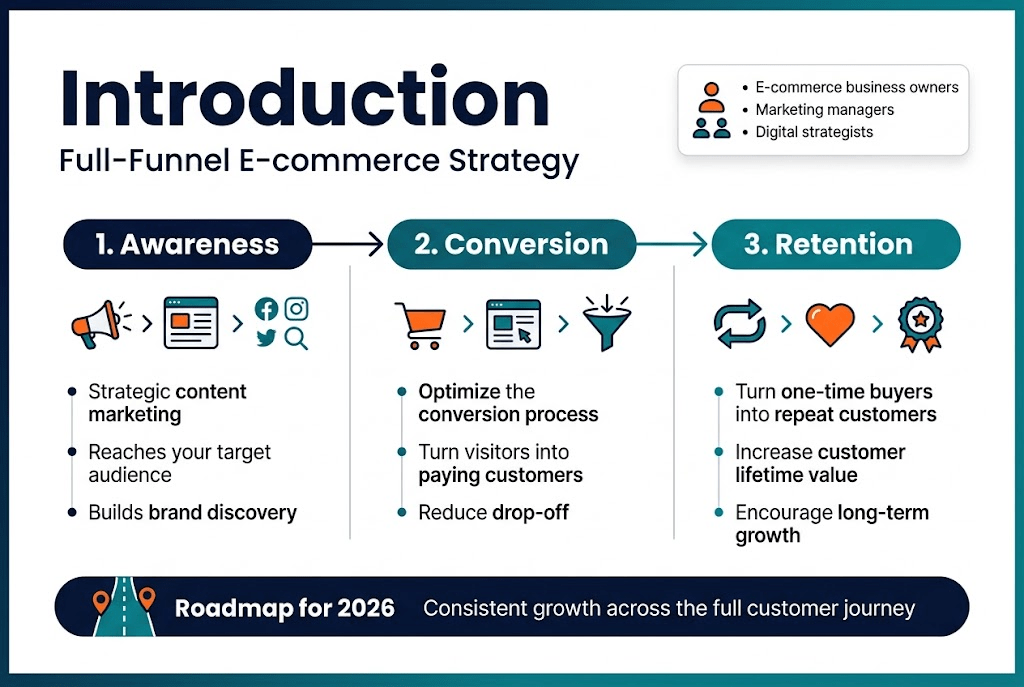
E-commerce is getting more competitive every year, and scattered marketing efforts just don’t cut it anymore. A full-funnel e-commerce strategy connects every touchpoint from first discovery to repeat purchase, creating a smooth path that turns browsers into loyal customers.
This guide is for e-commerce business owners, marketing managers, and digital strategists who want to build a comprehensive marketing system that spans all stages of the customer journey. Whether you’re running a small online store or managing marketing for a growing brand, these tactics will help you create consistent growth.
We’ll walk through building awareness with strategic content marketing that actually reaches your target audience, not just anyone with a pulse. You’ll learn how to optimize your conversion process so more visitors become paying customers. Plus, we’ll cover proven retention strategies that turn one-time buyers into repeat customers who spend more over time.
By the end, you’ll have a clear roadmap for creating a full-funnel e-commerce strategy that drives real results in 2026’s competitive landscape.
Understanding the Modern E-Commerce Customer Journey
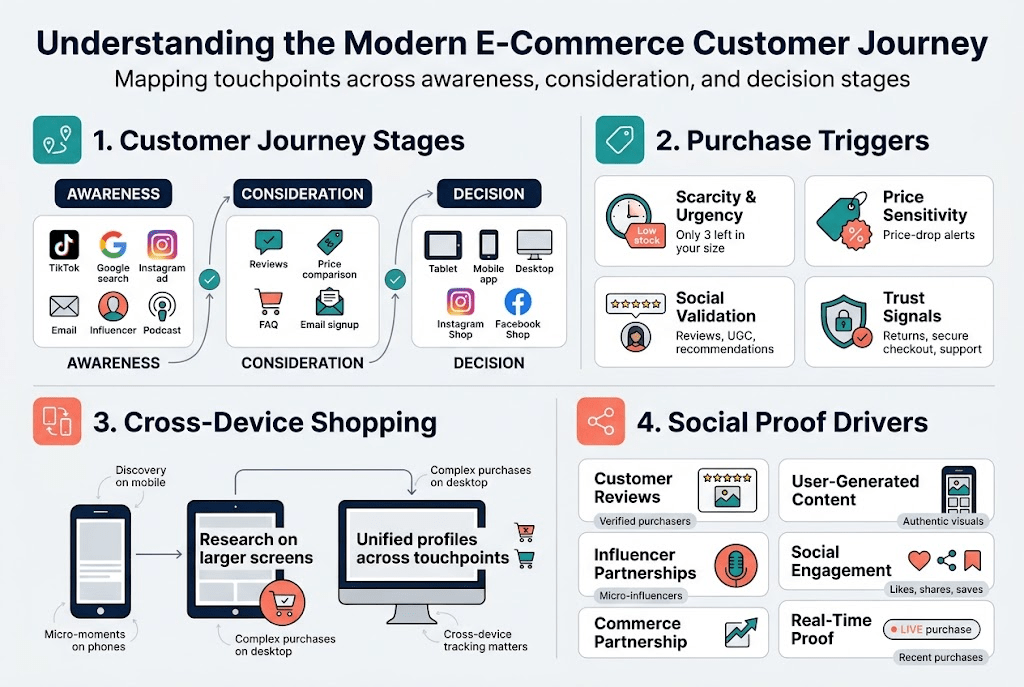
Mapping touchpoints across awareness, consideration, and decision stages
Today’s e-commerce customer journey looks nothing like the simple funnel models from just a few years ago. Shoppers now bounce between multiple touchpoints before making a purchase, creating a complex web of interactions that smart retailers need to understand and optimize.
During the awareness stage, customers discover your brand through diverse channels. They might see a TikTok video featuring your product, click through from a Google search, or stumble upon your Instagram ad. Email newsletters, influencer partnerships, and podcast sponsorships all serve as potential entry points. The key is recognizing that most customers won’t buy immediately after their first interaction.
The consideration phase gets even more intricate. Customers actively research products through review sites, compare prices across different platforms, and seek recommendations from their social networks. They might add items to their cart on their phone during lunch break, then research alternatives on their laptop at home. Some will sign up for your email list to receive discount codes, while others browse your FAQ section to understand shipping policies.
Decision-making happens across multiple sessions and devices. A customer might read product reviews on their tablet, check sizing information on your mobile app, and finally complete the purchase on their desktop computer three days later. Others make split-second decisions on social media platforms, buying directly through Instagram or Facebook shops without ever visiting your main website.
Identifying key behavioral triggers that drive purchase decisions
Understanding what pushes customers from consideration to conversion requires analyzing both emotional and practical triggers that influence buying behavior.
Scarcity and urgency remain powerful motivators, but they’ve evolved beyond basic countdown timers. Customers respond to inventory alerts (“Only 3 left in your size”), limited-time promotions with clear end dates, and exclusive access offers for email subscribers. Real-time social proof, like showing how many people viewed a product in the last 24 hours, creates natural urgency without feeling manipulative.
Price sensitivity varies dramatically across different customer segments and product categories. Some shoppers wait for sales, subscribing to price-drop notifications and abandoning carts until they receive discount codes. Others prioritize convenience and speed, willing to pay premium prices for same-day delivery or hassle-free returns.
Social validation drives many purchase decisions. Customers look for detailed reviews, user-generated content showing products in real-life situations, and recommendations from people they trust. They want to see how products fit different body types, work in various home settings, or perform under different conditions.
Trust signals significantly impact conversion rates. Clear return policies, secure payment options, customer service availability, and professional website design all contribute to purchase confidence. First-time buyers especially need reassurance about your brand’s reliability and commitment to customer satisfaction.
Analyzing cross-device shopping patterns and preferences
Modern shoppers seamlessly move between smartphones, tablets, and computers throughout their buying journey, creating challenges and opportunities for e-commerce brands.
Mobile devices dominate the discovery and research phases. Customers use their phones to browse products during commutes, compare prices in physical stores, and share interesting finds with friends on social media. Mobile shopping often happens in micro-moments – short bursts of activity between other tasks.
However, complex purchases frequently migrate to larger screens. When customers need to compare multiple products, read detailed specifications, or coordinate household purchases, they often switch to tablets or computers. This behavior is particularly common for high-value items, bulk orders, or purchases requiring careful consideration.
Cart abandonment patterns differ significantly across devices. Mobile users abandon carts more frequently due to distractions, poor mobile checkout experiences, or the intention to complete purchases later on other devices. Desktop users who abandon carts are more likely to be comparison shopping or waiting for better deals.
Cross-device tracking becomes essential for understanding complete customer journeys. Many attribution models fail to capture the full picture when customers discover products on mobile but purchase on desktop, or vice versa. Successful brands implement unified customer profiles that track interactions across all touchpoints.
Recognizing the impact of social proof on buyer behavior
Social proof has evolved into one of the most influential factors in e-commerce decision-making, taking multiple forms that smart brands leverage strategically.
Customer reviews remain the gold standard for social proof, but their impact depends heavily on quality and authenticity. Shoppers look for detailed reviews that address specific concerns, include photos or videos, and come from verified purchasers. They can quickly spot fake reviews and discount brands that rely on them.
User-generated content (UGC) provides authentic social proof that feels less promotional than traditional marketing. Customers sharing photos of products in their homes, wearing clothing items, or using tools for specific projects creates relatable proof points that influence potential buyers. This content performs especially well on visual platforms like Instagram and Pinterest.
Influencer partnerships work best when they feel authentic and aligned with the influencer’s usual content. Micro-influencers often generate higher engagement rates and more trust than celebrity endorsements because their audiences view them as more relatable and genuine.
Social media engagement metrics serve as modern word-of-mouth recommendations. Products with thousands of likes, shares, or saves signal popularity and desirability to potential customers. Many shoppers check social media presence before making purchases, looking for active communities and positive brand interactions.
Real-time social proof, such as showing recent purchases or highlighting trending products, creates momentum and reduces decision fatigue. When customers see that others are actively buying specific items, it reduces the perceived risk of making the wrong choice and can accelerate purchase decisions.
Building Awareness Through Strategic Content Marketing
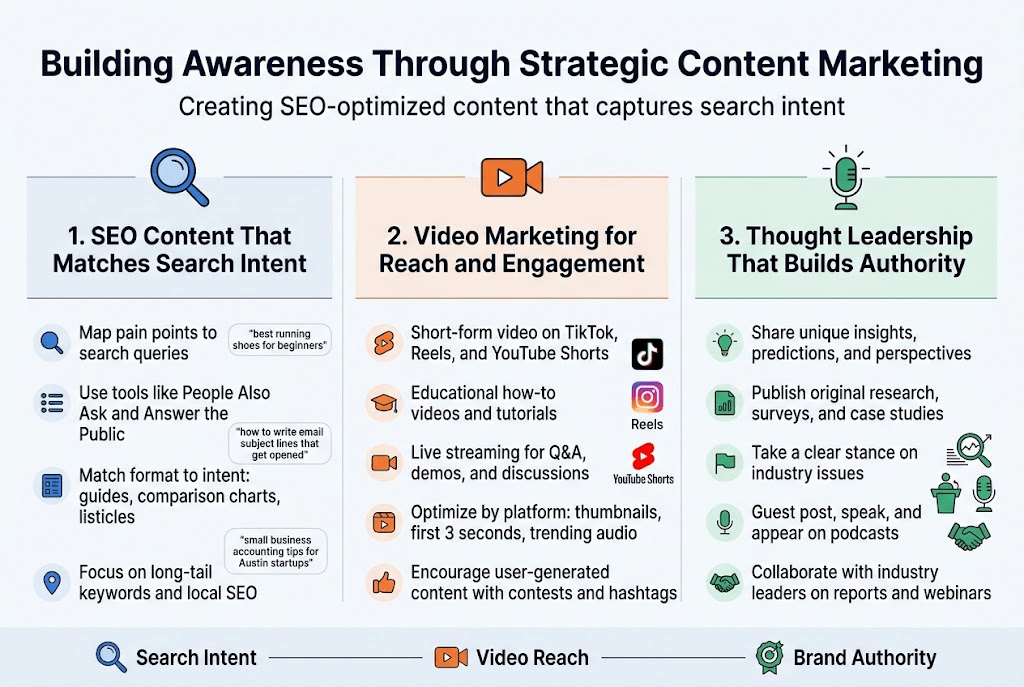
Creating SEO-optimized content that captures search intent
Search engines reward content that genuinely answers user questions. When developing content for the awareness stage, start by mapping your target customers’ pain points to specific search queries they might use. Tools like Google’s People Also Ask feature and AnswerThePublic reveal the exact questions your audience asks when they don’t yet know your brand exists.
The key is matching content format to search intent. If someone searches “best running shoes for beginners,” they want comparisons and recommendations, not a technical deep-dive into shoe construction. Create buying guides, comparison charts, and listicles that directly address these queries while naturally weaving in your products as solutions.
Long-tail keywords dominate awareness-stage content because they capture specific problems users want solved. Instead of targeting “email marketing,” focus on “how to write email subject lines that get opened” or “email marketing mistakes small businesses make.” These longer phrases have less competition and higher conversion potential.
Structure your content using the questions your customers actually ask. Each H2 heading should answer a specific question, with supporting H3S that dive deeper into related topics. This approach helps search engines understand your content’s relevance while making it scannable for human readers.
Don’t forget about local SEO opportunities. If you serve specific geographic areas, create location-based content that addresses regional needs or preferences. “Small business accounting tips for Austin startups” performs better than generic advice when targeting local markets.
Leveraging video marketing for maximum reach and engagement
Video content captures attention faster than any other format, making it perfect for introducing your brand to new audiences. Short-form videos on TikTok, Instagram Reels, and YouTube Shorts allow you to showcase products in action while building personality around your brand.
Educational content performs exceptionally well in the awareness stage. Create how-to videos, tutorials, and behind-the-scenes content that provides value without pushing for immediate sales. A skincare brand might create morning routine videos that naturally feature its products, while a software company could share productivity tips using its tools.
Live streaming builds authentic connections with potential customers. Host Q&A sessions, product demonstrations, or industry discussions to position your brand as accessible and knowledgeable. The interactive nature of live video creates trust faster than pre-recorded content.
Platform-specific optimization matters more than ever. YouTube videos need strong thumbnails and detailed descriptions for discoverability, while TikTok content should deliver value within the first 3 seconds. Instagram Reels benefit from trending audio and hashtags, but the content itself must deliver substance.
User-generated content amplifies your reach organically. Encourage customers to share videos using your products through contests, hashtag campaigns, or simple requests. This authentic content often outperforms polished brand videos because it comes from real users sharing genuine experiences.
Developing thought leadership content to establish brand authority
Thought leadership content positions your brand as the go-to resource in your industry. This means sharing insights, predictions, and unique perspectives that other companies can’t easily replicate. The goal is to become the source journalists, podcasters, and industry professionals reference when covering your sector.
Original research sets you apart from competitors recycling the same talking points. Conduct surveys, analyze industry data, or compile case studies that reveal new insights about your market. When you publish findings that others haven’t uncovered, you become the authority everyone cites.
Taking stands on industry issues builds recognition and respect. Don’t just report on trends – share what you think they mean and where you see things heading. Your predictions might not always be perfect, but consistent analysis establishes your voice in industry conversations.
Guest posting and speaking opportunities multiply your authority beyond your own channels. Write for industry publications, appear on relevant podcasts, and speak at conferences to reach audiences who haven’t discovered your brand yet. Each appearance reinforces your expertise while introducing you to new potential customers.
Collaborate with other industry leaders to expand your credibility. Co-author research reports, participate in expert roundtables, or host joint webinars. These partnerships expose you to new audiences while associating your brand with established authorities in your field.
Converting Interest Into Consideration With Targeted Campaigns
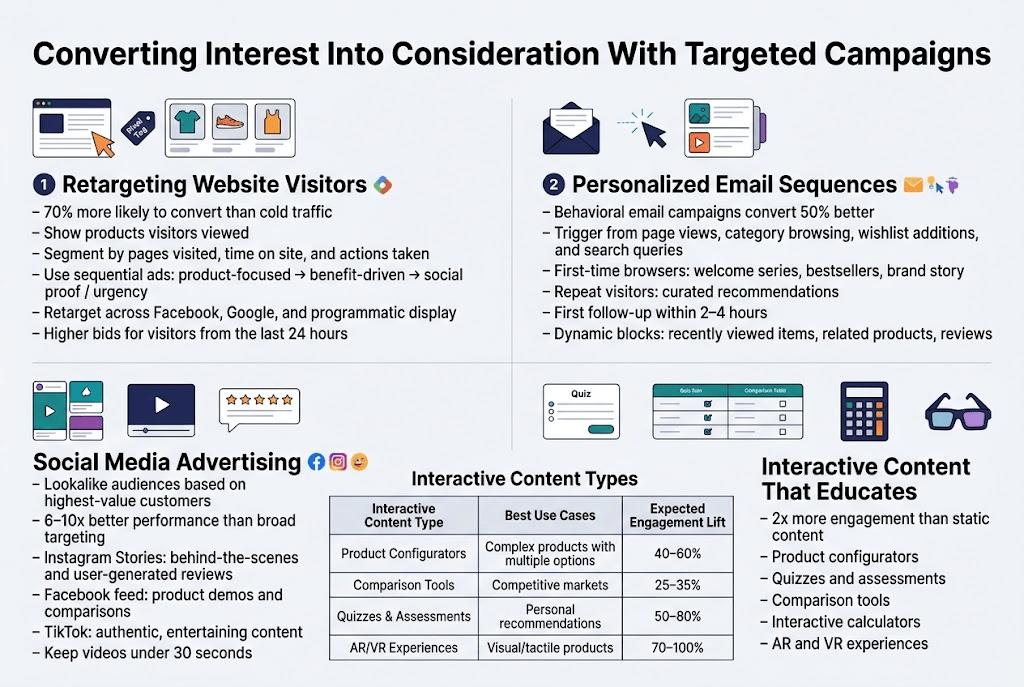
Implementing retargeting strategies for website visitors
Website visitors who don’t convert on their first visit represent your most valuable prospects. They’ve already shown interest in your products, making them 70% more likely to convert than cold traffic. Dynamic retargeting campaigns should showcase specific products visitors viewed, creating personalized ad experiences that remind them of their initial interest.
Set up pixel-based tracking to capture visitor behavior across different product categories. Create segmented audiences based on pages visited, time spent on site, and actions taken. For example, visitors who viewed high-ticket items but didn’t purchase receive different messaging than those who abandoned their cart.
Use sequential retargeting to tell a story across multiple touchpoints. Start with product-focused ads, then shift to benefit-driven messaging, and finally present social proof or urgency-based creative. This approach prevents ad fatigue while gradually addressing different purchase objections.
Cross-platform retargeting ensures maximum reach. Combine Facebook, Google, and programmatic display networks to maintain consistent messaging across channels. Adjust bid strategies based on recency – visitors from the last 24 hours typically warrant higher bids than week-old traffic.
Creating personalized email sequences based on browsing behavior
Behavioral email campaigns convert 50% better than generic promotional messages because they speak directly to demonstrated interests. Trigger automated sequences based on specific actions: product page views, category browsing, wishlist additions, and search queries.
Build different email flows for different behavioral patterns. First-time visitors receive a welcome series that highlights bestsellers and the brand story. Repeat visitors who explore multiple categories get curated product recommendations. Users who spend time reading product details but don’t make a purchase receive educational content that addresses common concerns.
Dynamic content blocks automatically populate emails with recently viewed items, related products, and personalized recommendations. Include user-generated content, such as reviews and photos, to build trust. Time these emails strategically – send the first follow-up within 2-4 hours of browsing, when interest remains high.
Segment email content by engagement level. Highly engaged subscribers can receive more frequent communications with detailed product information. Less engaged users need lighter touches, focusing on value and education rather than direct selling.
Utilizing social media advertising to nurture prospects
Social media platforms offer sophisticated targeting options that turn casual browsers into serious buyers. Create lookalike audiences from your highest-value customers to find similar prospects more likely to convert. These audiences typically show 6-10 times better performance than broad targeting.
Develop platform-specific creative strategies. Instagram Stories work well for behind-the-scenes content and user-generated reviews. Facebook feed ads excel at detailed product demonstrations and comparison content. TikTok campaigns should focus on authentic, entertaining content that doesn’t feel overly promotional.
Use video content to showcase products in action. Demonstration videos, customer testimonials, and how-to content perform exceptionally well in the consideration phase. Keep videos under 30 seconds for optimal engagement, but don’t sacrifice clarity for brevity.
Implement social proof campaigns featuring real customer reviews, ratings, and photos. These build trust and address common purchase hesitations. Rotate creative frequently to prevent ad fatigue – social media users see thousands of posts daily, so fresh content is essential.
Developing interactive content that educates potential customers
Interactive content generates 2x more engagement than static alternatives while providing valuable data about prospect preferences. Product configurators, quizzes, and comparison tools help customers find the right products while capturing behavioral insights.
Create product finder quizzes that ask about specific needs, preferences, and use cases. These tools guide customers toward relevant products while collecting zero-party data for future personalization. For example, a skincare brand might ask about skin type, concerns, and current routine to recommend personalized product bundles.
Develop comparison tools that highlight your products’ advantages over competitors. Include detailed specifications, customer ratings, and use-case scenarios. This content addresses the research phase of the buyer’s journey while positioning your brand as the obvious choice.
Interactive calculators help customers understand product value and ROI. Software companies can demonstrate potential cost savings, while furniture retailers might offer room-planning tools. These experiences create emotional investment in the solution while demonstrating clear benefits.
Use AR and VR experiences where applicable. Virtual try-on features for fashion and cosmetics, or room visualization tools for furniture, significantly reduce purchase hesitation. These technologies bridge the gap between online and in-store shopping experiences.
| Interactive Content Type | Best Use Cases | Expected Engagement Lift |
| Product Configurators | Complex products with multiple options | 40-60% |
| Comparison Tools | Competitive markets | 25-35% |
| Quizzes & Assessments | Personal recommendations | 50-80% |
| AR/VR Experiences | Visual/tactile products | 70-100% |
Optimizing the Conversion Process for Maximum Sales
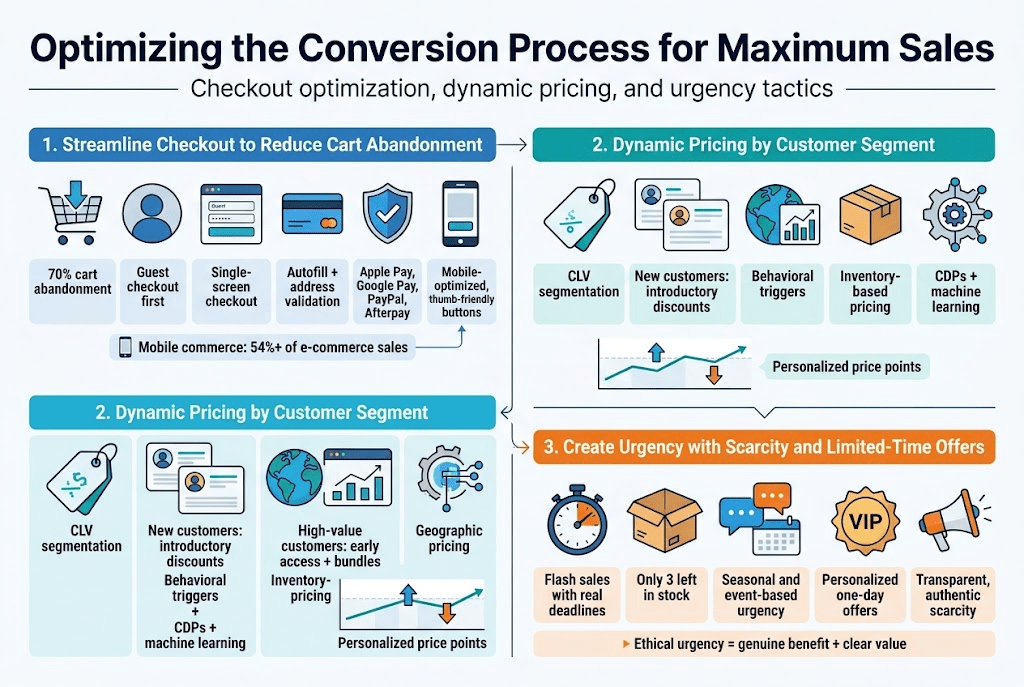
Streamlining checkout processes to reduce cart abandonment
Cart abandonment rates hover around 70% across most e-commerce platforms, making checkout optimization your biggest revenue opportunity. The key lies in removing every possible friction point between “add to cart” and “purchase complete.”
Start with a guest checkout option. Forcing users to create accounts kills conversions faster than almost anything else. Allow customers to complete their purchase first, then offer account creation as a value-add afterward. Amazon’s one-click purchasing revolutionized this space for good reason.
Your checkout form should fit on a single screen whenever possible. Multi-page checkouts work for complex B2B purchases, but consumer e-commerce thrives on simplicity. Use autofill technology to populate shipping and billing information, and implement address validation to prevent delivery failures.
Payment options matter more than ever. Beyond traditional credit cards, integrate digital wallets like Apple Pay, Google Pay, and PayPal. Buy-now-pay-later services like Klarna and Afterpay have become essential, especially for Gen Z shoppers. Each additional payment method can boost conversion rates by 2-3%.
Trust signals throughout checkout reduce anxiety-driven abandonment. Display security badges prominently, show clear return policies, and include customer service contact information. Real-time inventory updates prevent the frustration of discovering an item is out of stock after entering payment details.
Mobile optimization deserves special attention, as mobile commerce accounts for over 54% of all e-commerce sales. Thumb-friendly button placement, simplified forms, and mobile wallet integration aren’t optional anymore—they’re conversion necessities.
Implementing dynamic pricing strategies based on customer segments
Dynamic pricing transforms your revenue potential by delivering personalized price points based on customer behavior, demographics, and purchase history. This isn’t about gouging customers—it’s about maximizing value for both sides of the transaction.
Customer lifetime value (CLV) segmentation forms the foundation of smart dynamic pricing. High-value customers who consistently purchase premium products might receive exclusive early access to sales or special bundle pricing. New customers could see introductory discounts to encourage first purchases, while loyal customers get loyalty program benefits.
Geographic pricing reflects local market conditions and purchasing power. A customer in Manhattan might see different pricing than someone in rural Montana, reflecting local economic realities and competitive landscapes. International customers often require currency-specific pricing and region-appropriate promotions.
Behavioral triggers enable real-time price adjustments. Customers who abandoned carts might receive personalized discount codes via email. Repeat visitors browsing the same product category could see progressive discounts to encourage purchase. Users who spend significant time on product pages demonstrate strong intent and may respond to limited-time offers.
Inventory-based pricing helps manage stock levels while maximizing profits. Slow-moving inventory can trigger automatic discounts, while high-demand items maintain premium pricing until supply stabilizes. Seasonal fluctuations become opportunities rather than challenges when pricing adapts automatically.
The technology backbone requires robust data collection and analysis. Customer data platforms (CDPs) aggregate behavioral data, purchase history, and engagement metrics. Machine learning algorithms identify patterns and predict optimal price points for different customer segments.
Creating urgency with limited-time offers and scarcity tactics
Scarcity and urgency tap into fundamental human psychology, but they must feel authentic to modern consumers who’ve become skeptical of obvious manipulation tactics. The most effective approaches combine genuine limitations with compelling value propositions.
Flash sales create legitimate time pressure when executed properly. Rather than arbitrary countdowns, tie urgency to real events—such as inventory clearances, seasonal transitions, or supplier negotiations. Communicate the genuine reason behind the limited time frame. “Our warehouse lease expires Friday, so everything must go” feels more authentic than “Sale ends in 3 hours” with no context.
Stock level indicators work when they reflect reality. “Only 3 left in stock” becomes powerful when accurate and meaningful. Combine this with recent purchase notifications—”Sarah from Chicago just bought this item”—to demonstrate real demand. Social proof amplifies scarcity by showing others taking action.
Seasonal and event-based urgency aligns with natural buying cycles. Back-to-school promotions have built-in deadlines that feel logical to customers. Holiday gift guides create a natural sense of urgency around shipping deadlines. New product launches generate authentic excitement and limited availability.
Membership and exclusive access create sustainable scarcity without constant sales pressure. VIP customer tiers, early access programs, and limited membership offerings make customers feel special while driving immediate action. The exclusivity itself becomes valuable beyond the discount offered.
Personalized urgency works better than blanket campaigns. Customers who frequently browse but rarely purchase might receive “one-day-only” offers based on their viewing history. High-value customers could get exclusive access to limited-edition items or pre-order opportunities.
The key to ethical urgency lies in transparency and value delivery. Every scarcity tactic should provide a genuine benefit to customers who act quickly, whether through better pricing, exclusive access, or limited availability of genuinely desirable products.
Maximizing Customer Lifetime Value Through Retention Strategies
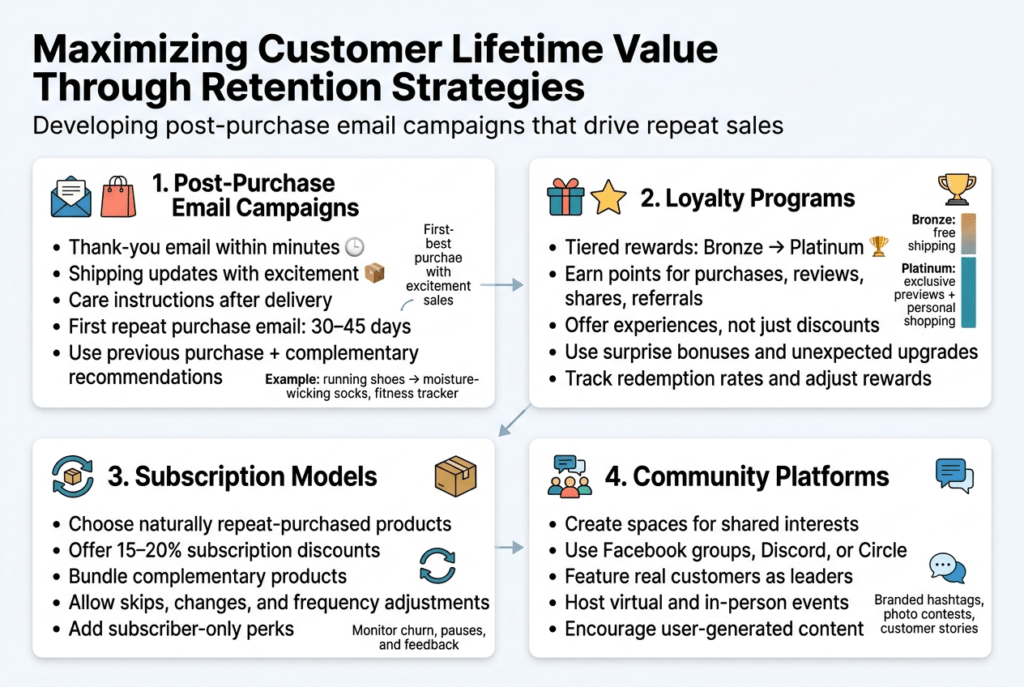
Developing post-purchase email campaigns that drive repeat sales
The magic happens after someone clicks “buy.” Your post-purchase email sequence becomes your secret weapon for turning one-time buyers into loyal customers. Start with a personalized thank you email that arrives within minutes of purchase, including order details and what to expect next.
Follow up with shipping notifications that build excitement rather than just sharing tracking numbers. Include complementary product suggestions or styling tips that make customers eager for their package to arrive. Once delivered, send care instructions or usage guides to help customers get the most value from their purchase.
The sweet spot for your first repeat-purchase email is 30-45 days after delivery. Reference their previous purchase specifically and recommend products that naturally pair with what they bought. Someone who purchased running shoes might love moisture-wicking socks or a fitness tracker.
Create abandoned cart recovery sequences for returning customers that feel distinct from new-visitor campaigns. These buyers already trust your brand, so focus on urgency and limited-time offers rather than lengthy product explanations. Include customer reviews and social proof from people who bought similar items.
Don’t forget win-back campaigns for customers who haven’t purchased in 90+ days. Offer exclusive discounts or early access to new collections. Sometimes, a simple “we miss you” message with a small incentive works better than aggressive sales pitches.
Creating loyalty programs that reward frequent customers
Modern loyalty programs go way beyond basic points systems. Build a tiered program where customers unlock new benefits as they spend more or engage deeper with your brand. Bronze members might get free shipping, while platinum members receive exclusive product previews and personal shopping consultations.
Design rewards that actually excite your customers. Instead of generic discounts, offer experiences like behind-the-scenes content, virtual events with founders, or early access to limited editions. Beauty brands excel at this by offering birthday gifts, seasonal product samples, and VIP customer service lines.
Make earning points fun and varied. Award points for purchases, reviews, social media shares, referrals, and even engagement with your content. A customer should feel like they’re making progress toward rewards through multiple touchpoints with your brand, not just spending money.
Create moments of surprise and delight within your program. Random bonus point days, unexpected upgrades, or small gifts in shipments keep customers engaged between major purchases. These moments build emotional connections that transcend transactional relationships.
Track redemption rates and adjust your program regularly. If customers hoard points rather than spend them, your rewards might be too expensive or not appealing enough. If redemption occurs too quickly, you might need higher point requirements or more valuable rewards to maintain the program’s profitability.
Implementing subscription models for recurring revenue
Subscription models transform unpredictable revenue into steady monthly income while dramatically increasing customer lifetime value. Start by identifying products in your catalog that customers naturally repurchase regularly – skincare, supplements, pet food, or office supplies work perfectly.
Offer subscription discounts that make financial sense for both sides. A 15-20% discount encourages sign-ups while maintaining healthy margins. Bundle complementary products together at subscription prices that beat the cost of individual purchases. A coffee company might combine beans, filters, and seasonal flavors into monthly packages.
Build flexibility into your subscription offerings. Let customers skip months, change products, or adjust delivery frequency without canceling entirely. Rigid subscription models frustrate customers and increase churn rates. The easier you make it to pause or modify, the more likely customers are to stay subscribed long-term.
Create subscription-only perks that non-subscribers can’t access. Exclusive products, limited editions, or subscriber-first access to sales create additional value beyond just convenience and savings. This approach makes subscription feel like a VIP membership rather than just automated purchasing.
Monitor subscription health metrics closely. Track churn rates, pause frequencies, and customer feedback to spot problems early. Common issues include delivery timing problems, product quality inconsistencies, or customers feeling locked into unwanted purchases. Address these quickly to maintain subscription growth.
Building community platforms that foster brand advocacy
Transform customers into brand ambassadors by creating spaces where they can connect around shared interests in your products. A fitness apparel brand might build a community focused on workout challenges and healthy living, while a cooking brand creates recipe-sharing groups.
Private Facebook groups, Discord servers, or dedicated community platforms like Circle work well for different demographics. Choose platforms where your target customers already spend time rather than forcing them to learn new tools. Keep communities active with regular challenges, Q&A sessions, and user-generated content contests.
Feature real customers as community leaders and brand advocates. Highlight their stories, showcase how they use your products, and give them special recognition or early access privileges. These authentic voices carry more weight than traditional advertising and help other community members see possibilities for themselves.
Host virtual and in-person events that bring community members together. Product launches, educational workshops, or casual meetups strengthen relationships between customers and your brand. When people form friendships through your community, they associate those positive feelings with your company.
Encourage user-generated content by making sharing easy and rewarding. Create branded hashtags, run photo contests, and feature customer content across your marketing channels. When customers see their photos and stories highlighted by the brand they love, they become even more invested in your success and more likely to continue sharing and purchasing.
Leveraging Technology and AI for Funnel Optimization
Using predictive analytics to identify high-value prospects
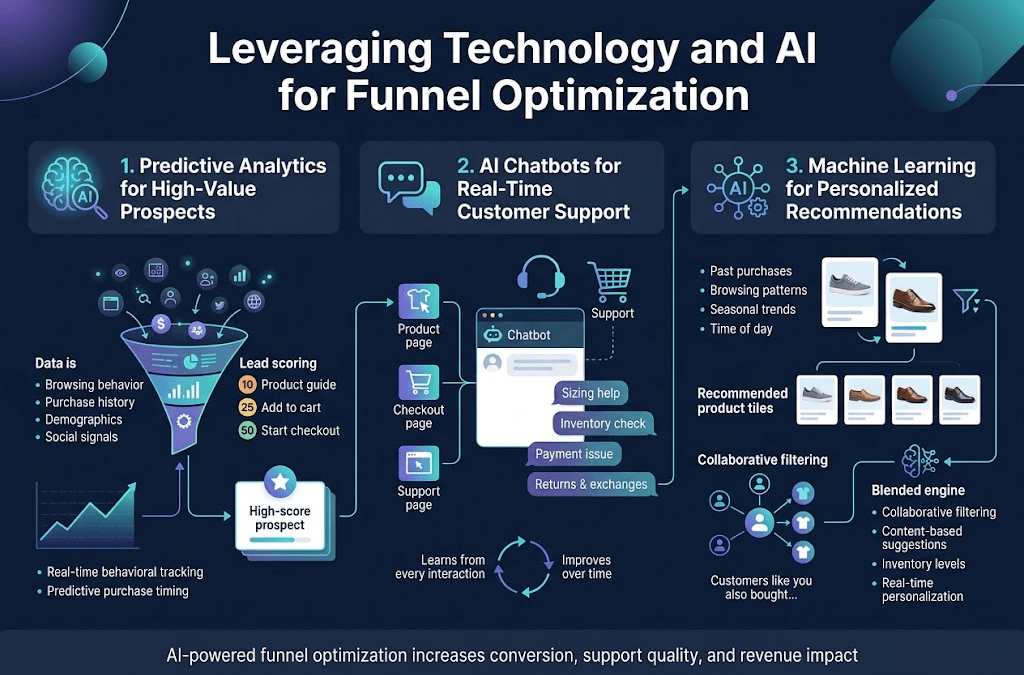
Smart businesses are turning to predictive analytics to identify customers most likely to make big purchases. These AI-powered tools crunch massive amounts of data – from browsing behavior and purchase history to demographic information and social signals – to create detailed profiles of your most valuable prospects.
The magic happens when machine learning algorithms analyze patterns across thousands of customer interactions. They pick up on subtle signals that humans might miss: a specific combination of pages viewed, time spent on product details, or even the device used for browsing. This data reveals which visitors are most likely to convert and become repeat customers.
Consider implementing lead-scoring models that automatically rank prospects by their likelihood of purchase. These systems assign numerical values to different behaviors – maybe 10 points for downloading a product guide, 25 points for adding items to the cart, and 50 points for starting the checkout process. Your sales team can then focus its energy on prospects with the highest scores.
Real-time behavioral tracking takes this further by adjusting scores as customers interact with your site. Someone who returns multiple times to view the same product category might suddenly jump to the top of your priority list. Advanced platforms can even predict when a prospect is most likely to make a purchase, allowing you to time your outreach perfectly.
Implementing chatbots for real-time customer support
Modern chatbots have evolved far beyond simple FAQ responses. Today’s AI-powered conversational assistants can handle complex customer inquiries, guide shoppers through product selections, and even complete transactions without human intervention.
The best chatbots integrate seamlessly with your product catalog and customer database. When someone asks about sizing for a specific jacket, the bot instantly accesses inventory data, size charts, and even previous purchase history to provide personalized recommendations. This level of sophistication dramatically reduces response times while maintaining service quality.
Smart deployment strategies position chatbots at critical decision points throughout the customer journey. Place them on product pages to answer technical questions, on checkout pages to resolve payment issues, and on support pages to handle returns and exchanges. The key is making help available exactly when customers need it most.
Advanced chatbots learn from every interaction, becoming more effective over time. They track which responses lead to successful conversions and which ones cause customers to abandon their journey. This continuous learning allows them to refine their approach and provide increasingly relevant assistance.
Personalizing product recommendations with machine learning
Machine learning transforms generic product suggestions into highly targeted recommendations that feel almost telepathic. These systems analyze dozens of factors simultaneously – past purchases, browsing patterns, seasonal trends, and even the time of day – to predict what each customer wants to see.
Collaborative filtering takes recommendations to the next level by finding patterns among similar customers. If people who bought item A and item B also frequently purchase item C, the algorithm will suggest item C to customers showing similar behavior patterns. This approach uncovers unexpected connections that drive cross-selling opportunities.
Real-time personalization adjusts recommendations as customers browse your site. Someone who starts by looking at casual shoes but then views dress shoes might see their homepage recommendations shift toward more formal footwear options. This dynamic adaptation keeps the shopping experience relevant and engaging.
The most effective recommendation engines blend multiple approaches. They combine collaborative filtering with content-based suggestions, seasonal trends, and inventory levels. This creates a robust system that performs well even for new customers with limited purchase history. Testing different recommendation strategies across customer segments helps optimize performance and maximize revenue impact.
Measuring Success and Continuously Improving Performance
Setting up comprehensive tracking for each funnel stage
Data is the backbone of any successful e-commerce strategy. Without proper tracking across every touchpoint, you’re essentially flying blind through your customer journey. Start by implementing Google Analytics 4 with enhanced e-commerce tracking, but don’t stop there. Layer on tools like Hotjar for user behavior insights, Mixpanel for detailed event tracking, and customer data platforms like Segment to unify your data streams.
Your tracking architecture should capture micro-conversions at each stage. For awareness, track content engagement metrics, social media reach, and brand search volume. During consideration, monitor email open rates, product page dwell time, cart abandonment rates, and comparison-shopping behavior. At conversion, track not just sales but also checkout flow completion rates, payment method preferences, and mobile versus desktop performance.
Set up custom attribution models that go beyond last-click attribution. Multi-touch attribution reveals how different channels work together throughout the customer journey. Use UTM parameters consistently across all campaigns and create a standardized naming convention that your entire team can follow.
Don’t forget about post-purchase tracking. Monitor delivery satisfaction, return rates, customer service interactions, and repeat purchase timing. This data feeds directly into your retention strategies and helps predict customer lifetime value.
Analyzing key performance indicators to identify bottlenecks
Raw data means nothing without proper analysis. Focus on conversion rates between each funnel stage rather than just overall metrics. If you’re getting plenty of website traffic but low add-to-cart rates, your product pages need work. High cart abandonment might signal checkout friction or unexpected shipping costs.
Create cohort analyses to understand how customer behavior changes over time. Track metrics such as time-to-purchase, average order value, trends, and seasonal buying patterns. Use tools like Google Analytics’ funnel visualization to spot exactly where users drop off.
Pay special attention to mobile performance metrics. With mobile commerce growing rapidly, desktop-optimized funnels often fail on smaller screens. Analyze load times, navigation patterns, and form completion rates across devices.
Weekly performance reviews should include traffic sources, channel-level conversion rates, customer acquisition costs, and lifetime value calculations. Set up automated alerts for significant metric changes so you can respond quickly to both opportunities and problems.
| Stage | Key Metrics | Warning Signs |
| Awareness | Traffic, Brand Searches, Social Reach | Declining organic traffic, low social engagement |
| Consideration | Email Opens, Page Views, Time on Site | High bounce rates, low email CTR |
| Conversion | Cart Conversion, Checkout Completion | Rising abandonment, payment failures |
| Retention | Repeat Purchase Rate, CLV, NPS | Declining repeat rates, negative feedback |
Conducting A/B tests to optimize conversion rates
A/B testing transforms guesswork into data-driven decisions. Start with high-impact areas like product page layouts, checkout processes, and email subject lines. Test one element at a time to isolate what drives results.
Product page tests should focus on image placement, description length, social proof positioning, and call-to-action buttons. Even small changes, like button color or text, can create a significant lift. For checkout optimization, test form layouts, guest checkout options, payment method displays, and trust signals like security badges.
Email campaigns offer endless testing opportunities. Subject lines, send times, personalization levels, and content formats all impact performance. Test different segmentation approaches to deliver more relevant messages to specific customer groups.
Run tests for statistical significance before declaring winners. Small sample sizes or short test periods can lead to false conclusions. Use tools like Optimizely or VWO for complex multivariate testing, but Google Optimize works well for basic A/B tests.
Document every test result, including failures. Failed tests provide valuable insights about what doesn’t work and prevent repeating mistakes. Build a testing calendar that ensures continuous optimization without overwhelming your team.
Creating feedback loops for continuous strategy refinement
Sustainable growth requires systems that automatically improve your funnel over time. Create monthly strategy reviews that combine quantitative data with qualitative customer feedback. Survey customers at different stages of the journey to understand their experience and identify pain points that your analytics might miss.
Implement customer feedback widgets on key pages, post-purchase surveys, and exit-intent polls for visitors about to leave. This qualitative data often reveals issues that numbers alone can’t capture, like confusing product descriptions or unclear shipping policies.
Build cross-functional teams that include marketing, sales, customer service, and product development. Customer service teams often spot trends in complaints or questions that signal funnel problems. Sales teams understand objection patterns that could inform improvements to website copy.
Use tools like Slack or Microsoft Teams to create dedicated channels for sharing insights across departments. When customer service notices an increase in questions about a specific product feature, marketing can adjust messaging, and product teams can improve documentation.
Set up quarterly strategy sessions that evaluate overall funnel performance and plan major optimizations. These sessions should review changes in the competitive landscape, new technology opportunities, and shifting customer expectations. The goal is to stay ahead of market trends rather than just react to them.
Create playbooks for common optimization scenarios so your team can respond quickly to performance changes. When traffic drops, you should have a checklist of investigations to run. When conversion rates improve, you should know how to scale those successful elements across other areas.
Building a successful full-funnel e-commerce strategy in 2026 comes down to understanding your customer’s journey from first awareness to loyal repeat buyer. You need strategic content marketing to grab attention, targeted campaigns to nurture interest, smooth user experiences to drive conversions, and smart retention tactics to keep customers coming back. The key is connecting each stage so prospects flow naturally from discovering your brand to becoming your biggest advocates.
Don’t forget that technology and AI are your best friends when it comes to optimizing each part of your funnel. Track everything, measure what matters, and keep tweaking your approach based on real data. Start by mapping out your current customer journey, identifying the biggest gaps, and tackling them one by one. Your future customers are waiting for an experience that feels personal and effortless – give them exactly that, and watch your sales grow.
