
Using AI to Automate Product SEO for E-Commerce Stores
If you run an e-commerce store, you already know the pain of managing SEO for hundreds — sometimes thousands — of product pages. Writing optimized titles, finding the right keywords, fixing technical issues — it’s a lot to keep up with manually.
That’s where AI-powered SEO for e-commerce comes in. It takes the repetitive, time-consuming work off your plate and helps your product pages rank faster and smarter.
This guide is for e-commerce store owners, product managers, and digital marketers who want to scale their SEO without burning hours doing it by hand.
Here’s what we’ll cover:
- How to automate product title and description optimization so every page is built to rank
- Using AI for keyword research that targets what your actual buyers are searching for
- How to measure your AI SEO performance and keep improving results over time
Let’s get into it.
Understanding AI-Powered SEO for E-Commerce

How AI Transforms Traditional Product SEO Practices
AI redefines product SEO by replacing manual, time-intensive processes with intelligent automation. Instead of individually optimizing thousands of product pages, AI systems analyze patterns, predict search intent, and generate optimized content at scale — dramatically reducing human effort while improving consistency and accuracy across entire product catalogs.
Key AI Technologies Driving E-Commerce SEO Automation
Natural Language Processing (NLP), machine learning, and large language models are the core technologies powering e-commerce SEO automation. These tools enable smarter keyword clustering, automated meta-tag generation, and real-time content adjustments. With this in mind, next, we’ll see how these capabilities directly translate into streamlined product title and description optimization.
Automating Product Title and Description Optimization

Using AI to Generate SEO-Friendly Product Titles at Scale
AI tools can analyze search intent, competitor data, and keyword trends to automatically generate optimized product titles across thousands of listings simultaneously. This eliminates manual effort while ensuring each title follows proven SEO structures, incorporating primary keywords, product attributes, and conversion-focused modifiers that improve both rankings and click-through rates at scale.
Creating Keyword-Rich Product Descriptions Automatically
With this in mind, AI-powered content generation enables e-commerce stores to consistently produce detailed, keyword-rich product descriptions. By processing structured product data, AI embeds relevant search terms naturally while highlighting features and benefits. Maintaining brand voice throughout automation remains achievable by training AI models on approved content, establishing tone guidelines, and implementing human-review workflows that preserve authenticity without sacrificing efficiency.
AI-Driven Keyword Research for Product Pages
Identifying High-Converting Product Keywords with AI Tools
AI tools analyze vast datasets to pinpoint keywords that drive purchases, not just traffic. By evaluating search intent, competition levels, and conversion patterns, these tools help e-commerce stores prioritize the terms shoppers use when they are ready to buy. Rather than relying on guesswork, AI surfaces high-intent phrases such as “buy,” “best price,” and “free shipping” variations, ensuring your product pages attract visitors most likely to convert into paying customers.
Analyzing Competitor Keywords to Gain a Ranking Edge
With this in mind, AI-powered competitive analysis tools scan rival product pages to reveal which keywords are driving their rankings. By identifying gaps and opportunities, store owners can strategically target underserved terms that competitors overlook.
Targeting Long-Tail Keywords for Niche Product Categories
Previously, finding long-tail keywords required extensive manual research. Now, AI streamlines this by uncovering highly specific, low-competition phrases tailored to niche categories, helping smaller stores rank prominently and attract precisely targeted buyers efficiently.
Streamlining Technical SEO with AI Automation

Automating Meta Tags and Alt Text for Product Images
AI tools can automatically generate optimized meta titles, meta descriptions, and image alt text across thousands of product pages simultaneously. This eliminates repetitive manual work while ensuring that every page consistently meets SEO best practices, helping search engines better understand and index your product catalog.
Improving Site Structure and Internal Linking Automatically
With this in mind, AI can analyze your store’s architecture and automatically suggest or implement internal linking strategies that distribute page authority efficiently. It identifies gaps in linking between related products and categories, thereby strengthening your site’s overall crawlability and helping customers navigate your inventory more intuitively.
Using AI to Detect and Fix Technical SEO Errors Fast
AI-powered auditing tools continuously monitor your e-commerce site for critical technical issues, including broken links, duplicate content, slow page load times, and crawl errors. Rather than waiting for scheduled manual audits, these tools flag and prioritize errors in real time, enabling faster resolution and protecting your store’s search rankings from preventable technical setbacks.
Leveraging AI for Product Category Page Optimization

Generating Optimized Category Descriptions at Scale
Now that we have covered technical SEO automation, AI enables e-commerce stores to generate keyword-rich category descriptions for hundreds of pages simultaneously. Instead of manually crafting unique content, AI tools analyze top-ranking competitors and produce optimized descriptions that improve crawlability and user engagement, saving significant time while maintaining quality and consistency across every category page.
Using AI to Improve Faceted Navigation for SEO
With this in mind, AI helps determine which faceted navigation parameters—such as size, color, or price—should be indexed and which should not, preventing duplicate content issues. By smartly managing these filters, AI ensures that search engines crawl only valuable pages, strengthening overall domain authority and efficiently boosting category page visibility in search results.
Boosting Category Page Rankings with Smart Content Clusters
Previously, category pages often lacked supporting content. AI now builds strategic content clusters by linking relevant blog posts, guides, and product pages around core category topics. This interconnected structure signals topical authority to search engines, driving higher rankings and channeling qualified organic traffic directly to high-converting category pages across your store.
Measuring and Improving AI SEO Performance
Tracking Product Page Rankings and Organic Traffic Gains
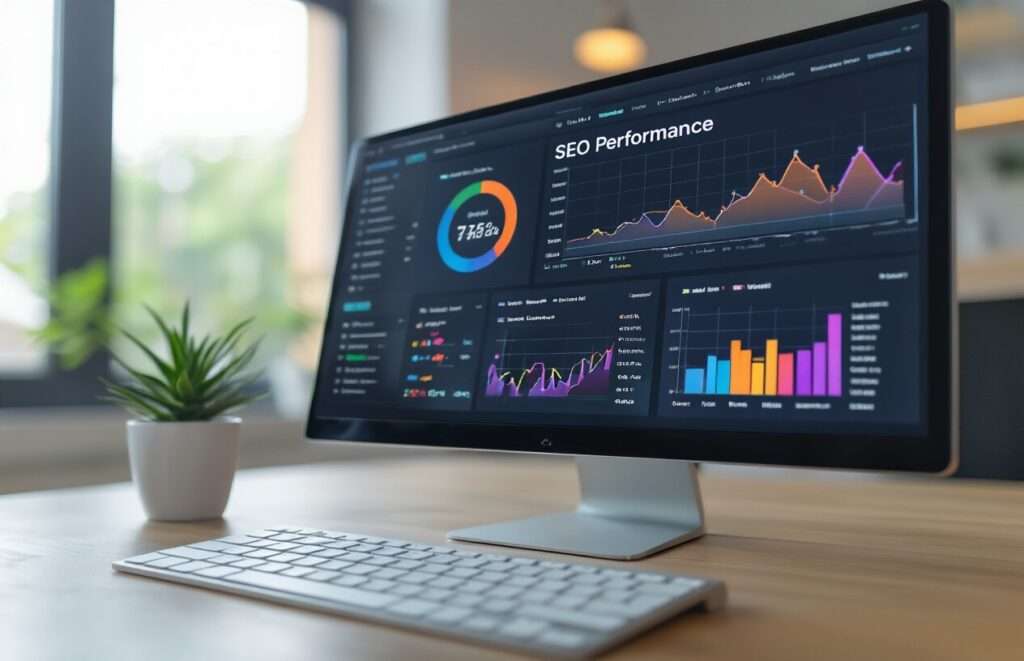
Now that we have covered how to leverage AI for category page optimization, measuring performance is the logical next step. Tracking product page rankings and organic traffic gains helps you assess whether your AI-driven SEO efforts are delivering measurable results. Monitoring keyword position changes, click-through rates, and session data helps you understand which optimizations are delivering real value across your product catalog.
Using AI Analytics to Identify Underperforming Product Pages
With this in mind, AI analytics tools can systematically scan your entire product inventory to flag pages with declining rankings or low organic visibility. Rather than manually auditing hundreds of pages, AI surfaces patterns and prioritizes which product pages need immediate attention, enabling your team to act faster and allocate resources more effectively toward pages with the highest revenue potential.
Continuously Refining AI SEO Strategies Based on Data
Previously, SEO strategies were often updated infrequently due to manual constraints. AI changes this by enabling continuous refinement cycles based on real-time performance data. As rankings shift and consumer search behavior evolves, AI models can recommend iterative adjustments to titles, descriptions, and keywords, ensuring your e-commerce store maintains competitive visibility and proactively adapts to algorithm changes without constant manual intervention.

AI-powered SEO is no longer a futuristic concept — it is a practical, accessible strategy that e-commerce stores can adopt right now. From automating product titles and descriptions to conducting smarter keyword research, streamlining technical SEO, optimizing category pages, and consistently measuring performance, AI offers a comprehensive toolkit to help online stores compete more effectively in search rankings. Each of these areas, when handled with the right AI-driven approach, can save significant time while delivering stronger, more consistent results.
The key takeaway is simple: embracing AI automation in your product SEO strategy is not about replacing human judgment — it is about enhancing it. Start by identifying the areas of your e-commerce SEO that consume the most time and resources, and explore how AI tools can step in to handle those tasks more efficiently. Whether you are a small business owner or an experienced marketing professional, taking action today will put your store in a stronger position for long-term organic growth.
